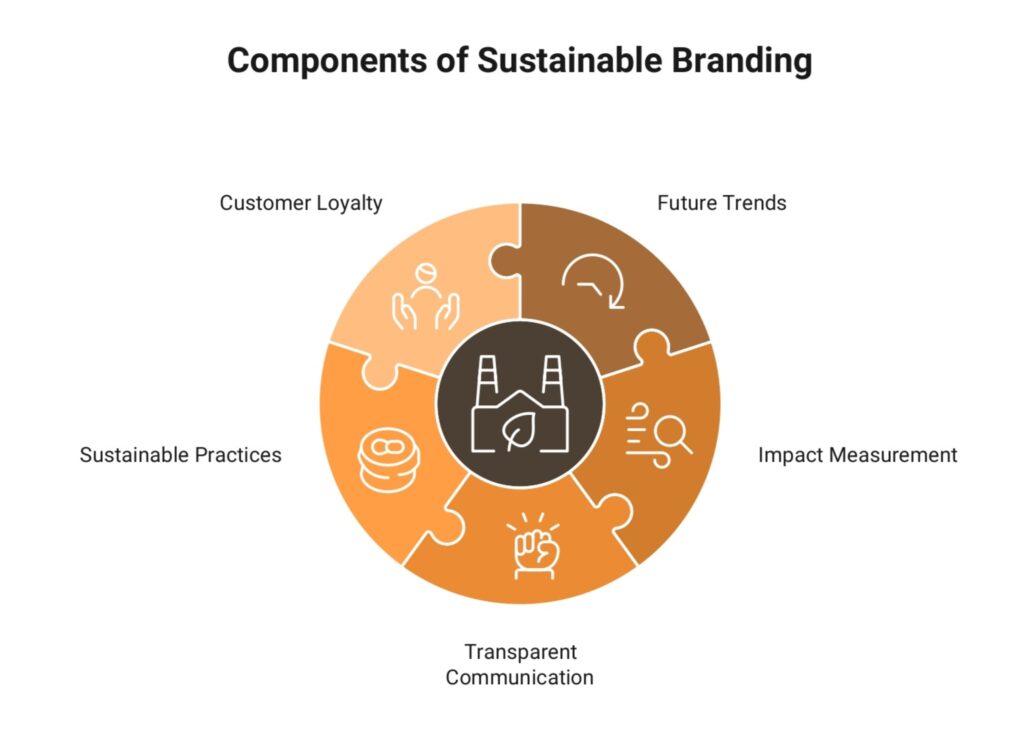
In 2025, as consumers increasingly prioritize purpose over price, brands that authentically embrace sustainability will unlock deeper customer loyalty and secure long-term growth. This document explores the importance of sustainable branding, core strategies for building a green brand, case studies of leading companies, methods for measuring ROI and loyalty impact, ways to avoid greenwashing, and future trends in sustainable marketing. By embedding eco-principles into product design, transparent storytelling, and loyalty programs, and by rigorously measuring impact, brands can transform green marketing into a powerful growth engine.
Sustainable Branding Strategy
Why Sustainable Branding Matters
Over the last decade, sustainability has transitioned from a competitive advantage to a fundamental business requirement. With growing concerns about climate change, resource depletion, and social accountability, companies are now expected to demonstrate their environmental responsibility. By 2025, eco-conscious buying will be the norm, with a significant majority of consumers actively seeking out environmentally responsible brands. Specifically, 78% of consumers worldwide prioritize environmentally responsible brands, and 63% of Gen Z shoppers are willing to pay more for sustainable products. These statistics underscore that eco-focused strategies are not a fleeting trend but a critical measure of brand resilience and customer loyalty.
Building a Green Brand: Core Strategies
To effectively build a green brand, companies should focus on the following core strategies:
Embed Sustainability in Product Design
Use Sustainable Materials: Incorporate recycled, upcycled, or rapidly renewable inputs such as bamboo and certified paper.
Design for Longevity: Design products for repair, reuse, and recycling to extend their lifecycles and reduce waste.
Transparent Communication
Display Certifications: Clearly display third-party certifications like FSC (Forest Stewardship Council) and CarbonTrust.
Publish Impact Reports: Provide concrete metrics in impact reports, such as tons of CO2 offset or the percentage of recycled content used.
Purpose-Driven Storytelling
Share Your Journey: Communicate your brand’s sustainability journey, including challenges, milestones, and future goals.
Engage Your Audience: Invite customers to participate in initiatives like tree-planting, cleanup drives, or product take-back programs.
Green Rewards & Loyalty Programs
Incentivize Eco-Friendly Actions: Offer loyalty points for recycling, choosing carbon-neutral shipping, or purchasing sustainable products.
Partner with NGOs: Collaborate with environmental NGOs to allow members to donate rewards, fostering deeper emotional connections.
Case Studies: Leaders in Green Branding
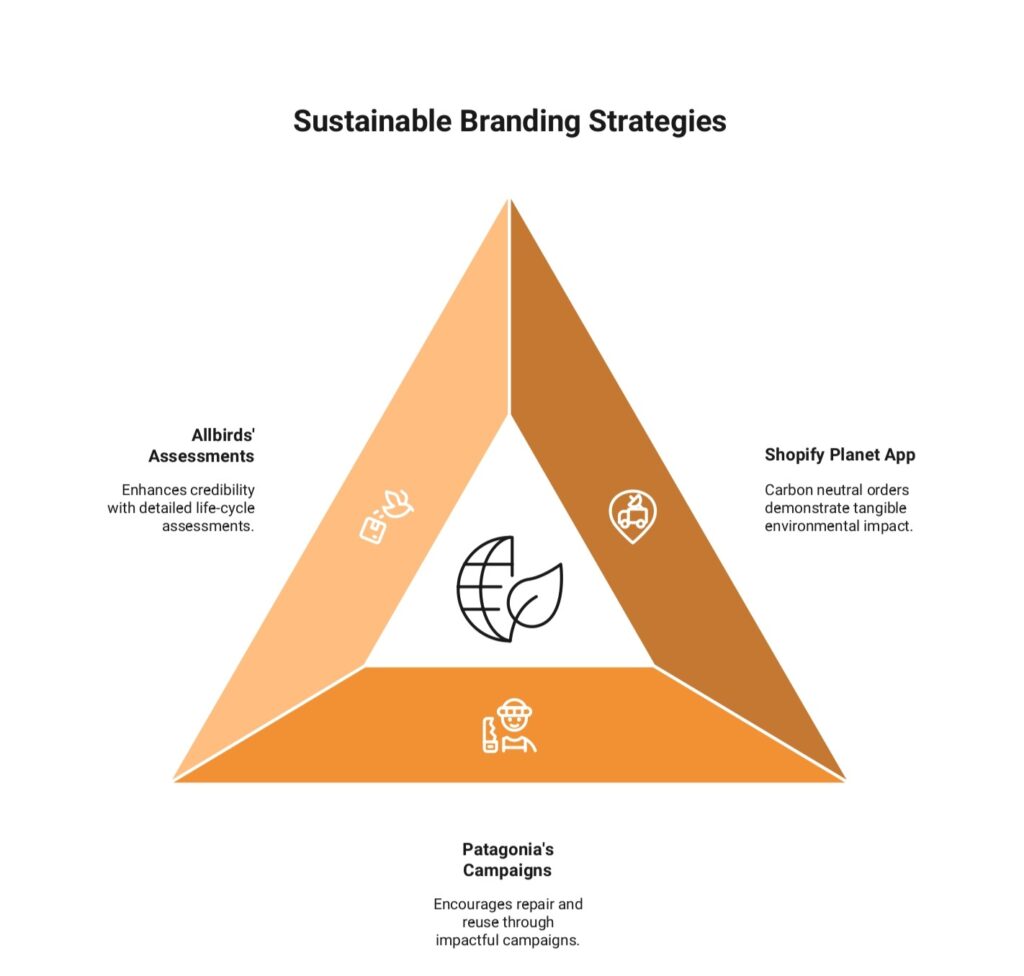
Several brands have successfully integrated sustainability into their core business models:
Strategies for Sustainable Branding
Measuring ROI and Loyalty Impact
To assess the effectiveness of green branding initiatives, brands should track both business and environmental KPIs:
Repeat Purchase Rate: Monitor repeat purchase rates among eco-segmented audiences.
Opt-in Rates: Track opt-in rates for green checkout options.
Average Order Value (AOV): Analyze the AOV on sustainable product lines.
Environmental Impact Metrics: Measure CO2 savings per order and other relevant environmental metrics.
Loyalty programs that incorporate eco-rewards can boost customer retention by up to 28%, as customers become more engaged with brands that align with their values.
Avoiding Greenwashing
To maintain credibility and avoid accusations of greenwashing, brands must ensure transparency and accountability:
Back Claims with Data: Support every claim with verifiable data and third-party audits.
Communicate Transparently: Be open about ongoing challenges and limitations.
Focus on Proof: Emphasize concrete evidence rather than vague buzzwords.
Only 1 in 5 consumers trust unverified green claims, highlighting the importance of transparency.
Future Trends in 2025
Several emerging trends will shape the future of sustainable branding:
AI-Powered Sustainability: Machine learning will optimize supply chains, but brands must disclose the environmental costs associated with AI.
Regulatory Compliance as Differentiator: Early adopters of stringent reporting
standards (e.g., EU CSRD, updated US Green Guides) will gain a competitive advantage.Community-Powered Advocacy: User-generated content showcasing eco-actions will amplify trust and transform customers into brand ambassadors.
In conclusion, sustainable branding is crucial for building lasting customer loyalty in 2025. By integrating eco-principles into product design, transparent storytelling, and loyalty programs, and by rigorously measuring their impact, brands can transform green marketing into a powerful engine for growth.