What is hyper-personalization? Think of it as marketing that knows you personally – not just your name, but your habits, what you like, when you’re online, and even what you might want next. It’s about creating a truly individualized experience for each customer.
The Simple Difference
Understanding the distinction between regular email segmentation and hyper-personalization is crucial:
Regular Email Segmentation:
- Puts people into groups (like “women aged 25-35” or “people who bought shoes”).
- Sends the same email to everyone in that group.
Hyper-Personalization:
- Treats each person as their own special group of one.
- Uses smart technology to create completely unique experiences for each individual.
How It Actually Works
Instead of just knowing basic stuff about you, hyper-personalization looks at tons of information:
- What you do online: Which pages you visit, how long you stay, what you click.
- When you’re active: Your favorite times to shop or read emails.
- Where you are: Your location and even the weather where you live.
- Your past behavior: What you bought before, what you looked at but didn’t buy.
- Real-time stuff: What you’re doing right now on a website or app.
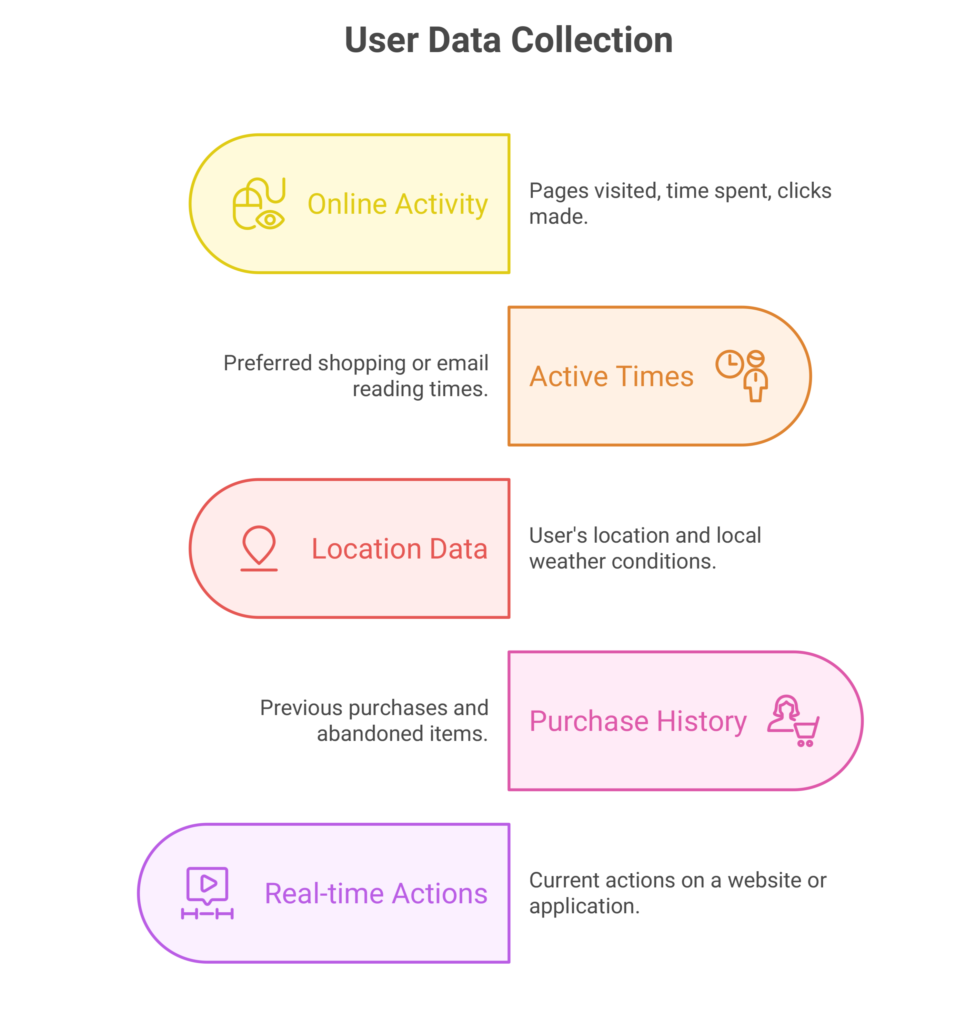
All this information gets fed into smart computer programs (AI) that instantly figure out what to show you. This allows for dynamic and relevant content delivery tailored to each user’s specific needs and preferences.
Real Examples That Make Sense
Several companies are already leveraging hyper-personalization to enhance customer experiences:
- Amazon: When you visit Amazon, the homepage looks different for everyone. If you recently looked at running shoes, Amazon might show you running gear, sports drinks, and fitness trackers – all personalized just for you.
- Netflix: Your Netflix homepage is completely different from your friend’s. It shows movies and shows based on what you actually watch, when you watch, and even what you stopped watching halfway through.
- Starbucks App: The app suggests different drinks based on the weather. time of day. your past orders, and even seasonal preferences. On a cold morning. it might suggest a hot latte instead of iced coffee
- Hilton Hotels: Their app can unlock your hotel room door, call elevators, and control your room’s TV – all personalized based on your preferences and past stays.
These examples demonstrate the power of hyper-personalization in creating engaging and relevant experiences across various industries.
Why This Matters for Your Business?
Implementing hyper-personalization can yield significant benefits for your business:
Better Results:
- People are 6 times more likely to buy when emails feel personally made for them.
- Customers stick around longer when they feel understood.
- Less people unsubscribe because the content actually matters to them.
Smarter Marketing:
- No more guessing what people want – the technology tells you.
- Automatic personalization means less work for you but better results.
- Real-time changes mean you can respond instantly to what customers do.
Simple Ways to Start
Embarking on a hyper-personalization strategy doesn’t have to be overwhelming. Here are some simple steps to get started:
- Collect the right information: Track what people do on your website, not just their name and email.
- Use smart tools: Get email platforms that can automatically personalize content based on behavior.
- Start small: Begin with personalized product recommendations or send-time optimization.
- Think beyond email: Use the same personalization on your website, app, and social media.
Conclusion
Hyper-personalization is like having a really good friend who remembers exactly what you like and always knows the perfect thing to suggest. Instead of treating customers like they’re all the same, it treats each person as unique and special.
The technology does the heavy lifting, but the result is simple: customers get exactly what they want, when they want it, making them happier and more likely to buy from you again. By embracing hyper-personalization, businesses can foster stronger customer relationships, drive sales. and achieve sustainable growth.