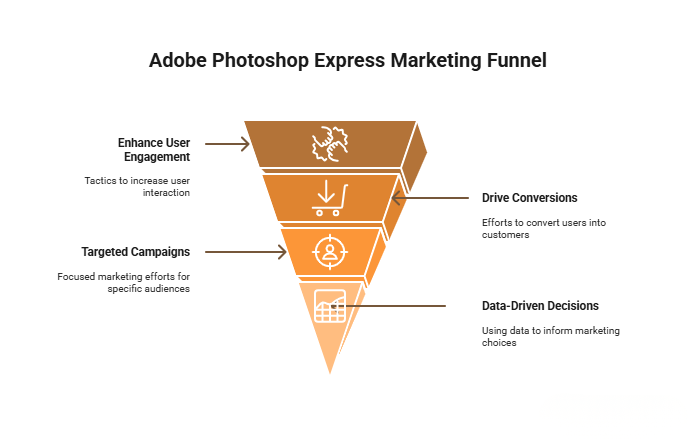
 Adobe Photoshop Express transformed from a simple mobile photo editor into a global creative powerhouse by focusing on education-first marketing, community building, and authentic influencer partnerships rather than traditional advertising. This strategic shift demonstrates how performance marketing can drive sustained user engagement and long-term growth.
Market Context and Challenge
By 2025, the mobile photo editing market had become intensely competitive, with apps like VSCO, Snapseed, and Lightroom Mobile vying for the attention of billions of daily photo creators. Adobe’s primary challenge was not just developing a superior app, but rather differentiating itself in a saturated market while simultaneously empowering users to effectively utilize the app’s features. The company recognized that sustainable growth depended on genuine user adoption and skill development, acknowledging the widening gap between app downloads and active user engagement, which rendered traditional acquisition strategies less effective.
Strategic Marketing Framework
Education-First Approach
Adobe’s core strategy revolved around providing tutorial-driven content that clearly demonstrated the capabilities of Photoshop Express. Instead of relying on generic “download now” messaging, the company focused on creating content that offered practical, step-by-step guidance to help users master the app’s tools and techniques.
Three-Pillar Campaign Structure
Adobe implemented a three-pillar campaign structure to drive user engagement and growth:
- Tutorial Series: The company created a series of short, practical lessons designed to deliver immediate results. These tutorials were posted on a consistent schedule to encourage users to return to the app regularly.
- Community Challenges: Adobe launched branded hashtag campaigns and themed contests that transformed individual editing experiences into shared creative endeavors. These challenges included features and recognition rewards to incentivize participation and foster a sense of community.
- Influencer Partnerships: Adobe collaborated with trusted photography and content creators who naturally integrated Photoshop Express into their existing workflows. The company prioritized authenticity over reach, ensuring that influencer partnerships resonated with users and drove genuine engagement.
Execution Tactics
Multi-Platform Content Distribution
Adobe optimized its content for each platform’s unique strengths. Quick edits were shared on TikTok and Instagram Reels, longer tutorials were posted on YouTube, and social-first templates were created for Snapchat and Facebook. The company also hosted live Q&A sessions and interactive sessions to create direct user engagement opportunities.
Community-Centric Growth
Adobe transformed users into advocates through contests, challenges, and showcases. Featured edits provided recognition that often mattered more than prizes, fostering a sense of belonging that sustained long-term engagement.
Data-Driven Optimization
Adobe used its analytics stack, including the Adobe Mobile SDK, to measure the effectiveness of every tutorial and campaign piece. Real-time personalization delivered engagement rates that were double those of generic content, while usage pattern tracking identified and resolved user journey friction points.
Integration with Adobe Ecosystem
Photoshop Express’s capabilities were amplified through seamless integration with Adobe Express and Creative Cloud. Users could begin edits on mobile and then refine them on desktop without starting over. Shared templates, brand kits, and cloud storage created workflow continuity that appealed to both casual creators and professionals.
The Owen Jones agency case demonstrated the real-world impact of this integration. By leveraging Adobe’s connected templates, the agency reduced revision time by approximately 40%, highlighting the value of the ecosystem beyond individual app functionality.
Key Success Factors
Educational Content as Growth Engine: Teaching users to create better edits built trust and loyalty more effectively than traditional sales messaging.
Community-Driven Social Proof: User-generated content and peer recognition created authentic endorsement that outperformed brand claims.
Authentic Influencer Integration: Credible creators demonstrating natural app usage resonated far more than polished advertisements.
Performance Marketing Foundation: Data-driven optimization ensured campaigns sustained growth rather than creating temporary spikes.
Future Implications
The success of Photoshop Express points to several emerging trends in performance marketing. AI-powered personalization will become standard, with editing tools automatically applying preferred styles. AR/VR integration may create new interactive editing experiences, while social commerce integration will streamline the path from creation to monetization.
Real-time analytics and rapid campaign adjustments will become essential as touchpoints multiply and user attention spans shrink. The brands that master this continuous optimization cycle will maintain a competitive advantage in increasingly crowded markets.
Key Takeaways
Adobe Photoshop Express demonstrates that sustainable growth stems from genuine user value creation rather than aggressive acquisition tactics. By combining educational content, community building, and authentic partnerships with rigorous performance measurement, brands can build lasting engagement that transcends initial downloads.
The key lesson for marketers is clear: teaching users, building community, and demonstrating real use cases drives deeper growth than volume-focused campaigns. When supported by proper tracking and continuous optimization, this approach creates campaigns that don’t just spike—they sustain long-term success.