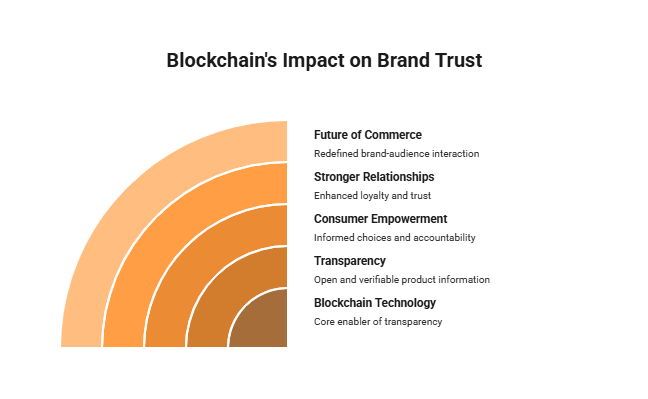
 In an era where 73% of consumers prioritize transparency and counterfeiting costs the global economy $4.2 trillion annually, blockchain technology has emerged as the definitive solution for verifiable brand transparency. By creating immutable, decentralized records of product origin, authenticity, and journey, blockchain transforms how brands build consumer trust and combat fraud.
What is Blockchain for Brand Transparency?
Blockchain is a distributed ledger technology that records transactions or data across multiple computers in a way that makes tampering virtually impossible. For brands, it creates an immutable digital record of every step in a product’s lifecycle—from raw materials to manufacturing, distribution, and final sale.
Unlike traditional supply chain tracking systems that rely on centralized databases vulnerable to manipulation, blockchain offers:
- Transparency: Every participant in the supply chain can verify product authenticity
- Immutability: Once recorded, data cannot be altered or deleted
- Decentralization: No single authority controls the information
- Real-time visibility: Consumers can trace products instantly via QR codes or mobile apps
Why Blockchain Matters for Brand Trust?
The Transparency Crisis
- 63% of consumers distrust corporate transparency claims
- $464 billion in annual losses from counterfeit goods globally
- Luxury goods face 40% counterfeiting rates in certain markets
Blockchain Solutions:
- Provide cryptographic proof of authenticity
- Enable direct consumer verification without middlemen
- Create tamper-proof records of ethical sourcing and sustainability claims
- Reduce fraud costs by up to 80% for brands
Real-World Applications in 2025
1. Luxury Goods Authentication
Brands like LVMH, Gucci, and Cartier now use blockchain to authenticate handbags, jewelry, and watches. Consumers scan a QR code to verify:
- Manufacturing date and location
- Previous ownership history
- Authenticity certification
- Resale authorization and value tracking
Impact: Counterfeits become instantly detectable; brand value and resale markets strengthen.
2. Food and Beverage Traceability
Walmart partnered with IBM on blockchain to track produce from farm to store, reducing food contamination response time from 21 days to 2.2 seconds.
Consumers now verify:
- Origin and harvest dates
- Pesticide/fertilizer use
- Organic/fair-trade certifications
- Storage and transportation conditions
3. Pharmaceuticals and Medical Supplies
Blockchain combats counterfeit medicines by tracking every pill from manufacturer to pharmacy. The WHO estimates 10% of medicines in low-income countries are counterfeit—blockchain can reduce this dramatically.
4. Fashion and Sustainability
Brands like Stella McCartney use blockchain to prove:
- Ethical labor practices at manufacturing facilities
- Sustainable material sourcing
- Carbon footprint data
- Worker wage transparency
Consumers increasingly demand this proof – 62% of Gen Z will pay more for transparent brands.
5. Art and Digital Collectibles
Blockchain enables non-fungible tokens (NFTs) that prove ownership and authenticity of digital art, limited editions, and collectibles, eliminating forgeries entirely.
How Brands Implement Blockchain Transparency
1. Choose Your Blockchain Platform
- Hyperledger Fabric: For enterprise supply chains (IBM, Walmart partnerships)
- Ethereum: For consumer-facing authentication and NFTs
- VeChain: Specialized for supply chain and product authentication
- Cosmos: For brand ecosystems with multiple stakeholders
2. Map the Supply Chain
Document every touchpoint: suppliers, manufacturers, distributors, retailers, end consumers. Create a digital record at each stage with verifiable data and timestamps.
3. Enable Consumer Access
Implement QR codes or NFC tags on products that link to blockchain records. Create mobile apps letting users verify authenticity, access sustainability data, and track products in real-time.
4. Build Stakeholder Trust
Educate supply chain partners, retailers, and consumers about the blockchain system. Transparency requires buy-in from all parties.
5. Integrate with IoT and AI
Combine blockchain with IoT sensors (temperature, humidity, location) to automatically record supply chain conditions. Use AI to detect anomalies or suspicious activity.
Challenges and Solutions
1. Scalability
Challenge: Blockchain networks can be slow and expensive at scale.
Solution: Use layer-2 solutions, sidechains, or specialized platforms like VeChain designed for high-volume supply chains.
2. Integration with Legacy Systems
Challenge: Many brands use outdated supply chain systems incompatible with blockchain.
Solution: Partner with blockchain consultants to create bridges between legacy systems and distributed ledgers.
3. Consumer Adoption
Challenge: Most consumers don’t understand blockchain or how to verify it.
Solution: Create simple, intuitive mobile apps and educational content explaining the verification process.
4. Cost of Implementation
Challenge: Initial setup and infrastructure can be expensive.
Solution: Start with pilot programs on high-value or counterfeit-prone products; scale gradually as ROI becomes evident.
2025 Trends in Blockchain Transparency
1. Mandatory Sustainability Reporting
Regulations like the EU Corporate Sustainability Reporting Directive (CSRD) increasingly require proof of ESG claims. Blockchain automates compliance and prevents greenwashing.
2. Direct-to-Consumer Authentication
Brands bypass retailers to sell directly, using blockchain to prevent unauthorized sellers and maintain brand control.
3. Decentralized Marketplaces
Secondary markets for luxury goods, fashion, and collectibles use blockchain to verify ownership and prevent counterfeits.
4. Tokenized Loyalty Programs
Brands issue blockchain-based loyalty tokens redeemable across partners, creating transparent, transferable rewards.
Quick Implementation Roadmap
Month 1-2: Choose platform, map supply chain, secure stakeholder buy-in
Month 3-4: Pilot on one product category, integrate IoT sensors
Month 5-6: Launch consumer-facing verification app
Month 7-12: Expand to full product range, optimize costs
Year 2+: Scale, add new features, integrate with partner ecosystems
Blockchain for brand transparency isn’t a future technology—it’s essential infrastructure for 2025. Brands that implement it early gain competitive moats through verified authenticity, consumer trust, and regulatory compliance. As counterfeiting, greenwashing, and supply chain opacity become increasingly intolerable to consumers and regulators alike, blockchain transforms from a nice-to-have into a must-have.
The brands winning in 2025 aren’t just claiming transparency – they’re proving it, immutably, to every customer.