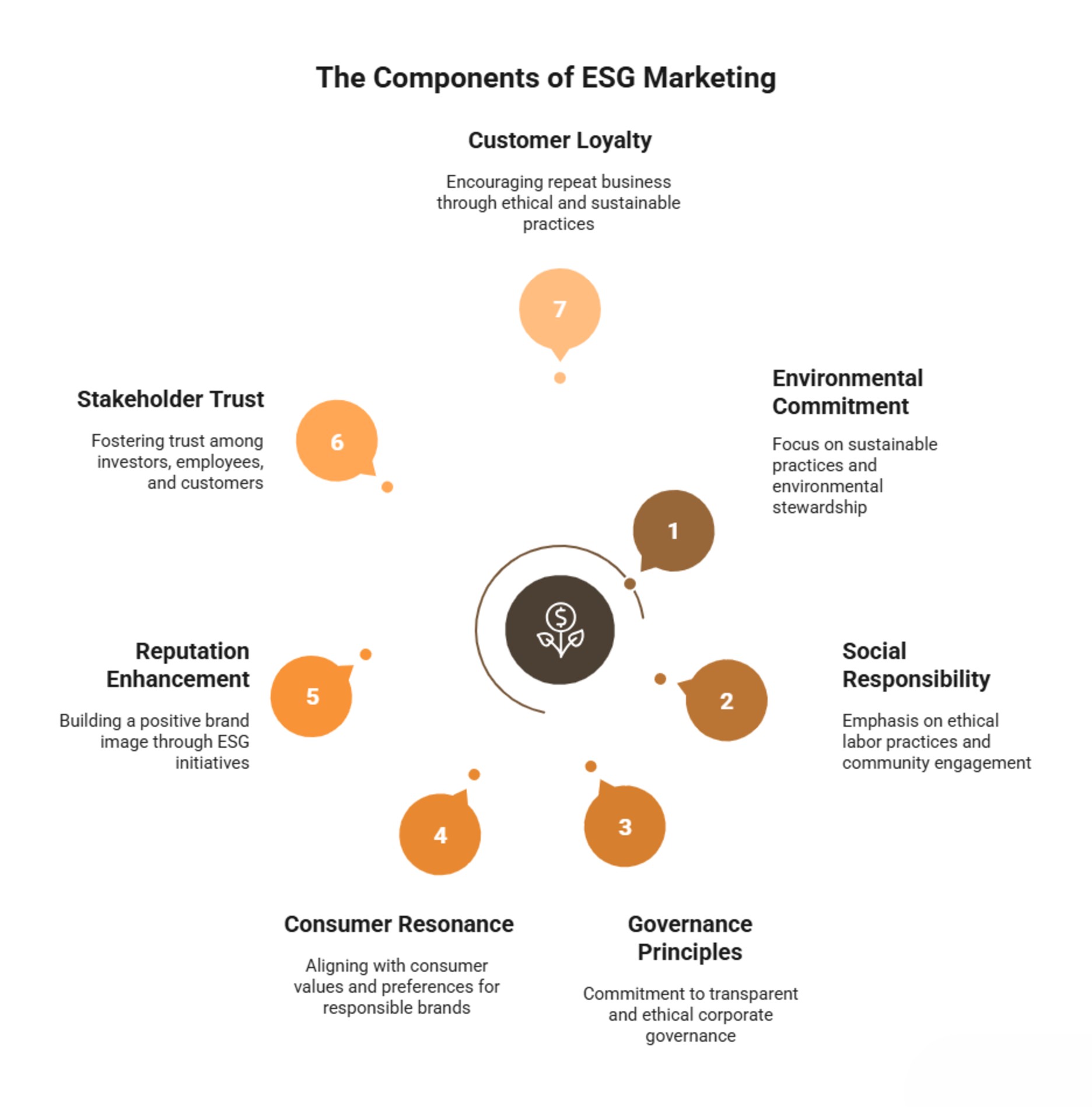
The Business Case for ESG Marketing
The demand for purpose-driven marketing has reached unprecedented levels, with 78% of US consumers considering sustainable lifestyle important and 73% of millennials willing to pay premium prices for sustainable products. This consumer shift translates into tangible business results, as purpose-driven brands demonstrate 175% brand value increase over 12 years compared to just 70% growth for traditional brands. Companies embracing ESG principles consistently outperform their competitors, achieving 6% higher market value and generating 20% more revenue than businesses that neglect environmental and social purpose.
The investment landscape further validates this trend, with ESG assets projected to reach $35 trillion by 2025, effectively representing half of all professionally managed investments worldwide. This massive capital allocation toward sustainable businesses creates a compelling environment for brands to integrate authentic purpose into their marketing strategies.
Successful Case Studies
Nike’s Colin Kaepernick Campaign:
Nike’s 2018 “Just Do It” campaign featuring Colin Kaepernick led to 31% sales increase and generated $6 billion in brand value despite initial controversy.
Patagonia’s “Don’t Buy This Jacket”:
Counter-intuitive campaign encouraging mindful consumption strengthened customer loyalty and reinforced brand’s environmental leadership position. Brand donates 1% of sales to environmental causes for nearly 40 years.
TOMS One for One:
Simple “buy one, give one” model donated 100+ million shoes to children in need, establishing TOMS as global footwear brand through purpose.
Ben & Jerry’s Social Activism:
Ice cream brand integrates social causes since 1978, from climate change to racial justice, building loyal customer community through authentic mission alignment.
ROI and Performance Metrics
- Customer Loyalty: 88% of consumers show increased loyalty to brands advocating social/environmental issues. 94% believe companies should have strong purpose, with 82% supporting purpose-driven brands.
- Employee Benefits: Purpose-driven companies see millennials 5.3x more likely to stay and non-millennials 2.3x less likely to leave.
- Financial Returns: Marketing automation in purpose-driven campaigns delivers 544% ROI ($5.44 for every $1 spent).
Consumer Behavior Insights
- Purchasing Power: Consumers willing to pay 9.7% premium for sustainable products. 90% of shoppers influenced by user-generated content in purchasing decisions.
- Authenticity Matters: Only 36% of marketers can accurately measure ROI, while 47% struggle with multi-channel attribution, emphasizing need for transparent metrics in ESG campaigns.
- Channel Performance: Email marketing generates $42 ROI per $1 spent, while SEO delivers 748% B2B ROI – both effective for purpose-driven content distribution.
Implementation Strategy
Successful ESG marketing requires avoiding greenwashing by focusing on substantiated claims, measurable outcomes, and third-party verification rather than making vague sustainability promises. Authentic integration demands embedding purpose into core business operations, not merely surface-level marketing messaging, as demonstrated by the most successful purpose-driven brands.
Effective measurement strategy involves tracking both financial metrics such as revenue and customer lifetime value alongside impact metrics that demonstrate genuine environmental and social outcomes. This dual approach ensures comprehensive ROI assessment while maintaining authenticity and accountability to stakeholders.