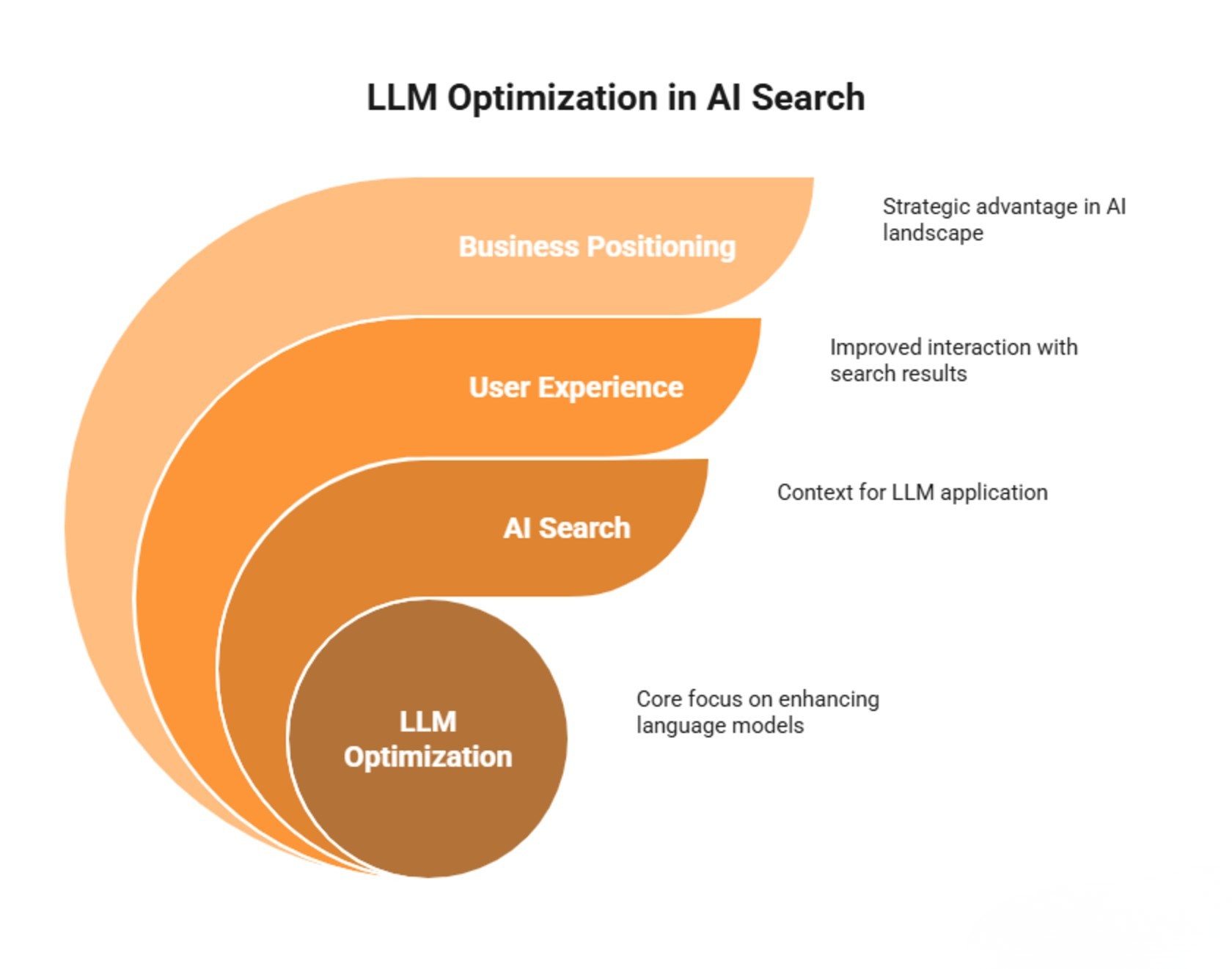
Unlocking visibility in today’s AI-driven search landscape demands a paradigm shift. LLM Optimization (LLMO)-the art and science of tailoring content for large language models—has emerged as the new SEO. By understanding how AI search interprets, ranks, and retrieves information, brands and creators can ensure their content not only appears but thrives in AI-powered discovery.
Why LLMO Matters
Traditional SEO focused on keyword placement, backlinks, and technical site health for web crawlers. AI search, powered by large language models, prioritizes relevance, context, and semantic richness over keyword density. As users increasingly turn to AI assistants for answers, content must be optimized not just for pages but for natural-language understanding and concise, high-value responses.
Core Principles of LLMO
- Semantic Depth Over Keyword Stuffing
Rather than targeting isolated keywords, LLMO emphasizes comprehensive coverage of concepts. Address questions fully, use related terms, synonyms, and topic clusters that signal expertise and context to AI models. - Structured, Scannable Content
Break content into clear sections with descriptive headings. AI models identify and extract meaningful chunks—such as definitions, step-by-step guides, and summaries—to generate succinct answers for users. - Clear Intent Alignment
Map content to specific user intents (informational, navigational, transactional). Use question-and-answer formats, FAQs, or conversational snippets that mirror how users query AI assistants. - High-Quality Data and Sources
AI models value verifiable, authoritative information. Incorporate data points, statistics, and references (where possible) to demonstrate credibility. Structured data markup (e.g., JSON-LD) can further signal trustworthiness. - Conversational Tone and Clarity
LLMs excel at understanding and generating human-like text. Craft content in a natural, conversational style—anticipating follow-up questions and guiding AI to assemble coherent, user-friendly responses.
Key LLMO Strategies
1. Intent-Focused Content Mapping
- Identify top user queries around your topic
- Create dedicated pages or sections for each question
- Use clear, natural phrasing in headings (e.g., “How to optimize LLM prompts?”)
2. Optimizing for Snippet Generation
- Begin answers with concise, 1–2 sentence summaries
- Use bullet lists for step-by-step instructions or definitions
- Mark up key elements with headings and emphasized text
3. Leveraging Rich Media
- Integrate images, diagrams, and tables to support explanations
- Provide alt text with descriptive, context-rich captions
- Embed short code snippets or examples that AI can surface directly
4. Continuous Performance Feedback
- Monitor AI-generated answer prevalence via platform analytics
- Track shifts in featured snippet share or voice-assistant query inclusion
- Refine content iteratively, expanding or pruning based on AI response quality
Example: Optimizing an LLM Prompt Guide
Before LLMO:
“This guide shows prompt engineering.”
After LLMO:
How to Engineer Effective LLM Prompts
Effective prompts begin with a clear instruction, specify the role and format, and include examples.
- Define the Role: “You are an expert copywriter.”
- Set the Task: “Write a 200-word blog introduction.”
- Provide Examples:
- Good: “Explain the benefits of green tea in a friendly tone.”
- Bad: “Talk about tea.”
This structure helps AI extract precise guidance for users and share it directly in answer snippets.
The Future of Search Optimization
As AI assistants evolve, LLMO will become integral to content strategy. Brands that master LLMO will enjoy enhanced visibility in AI-driven channels—earning featured answers, driving voice-search traffic, and cementing authority. In this new era, search optimization transcends links and keywords; it hinges on conversation, context, and clarity.
Embracing LLM Optimization positions your content for peak performance in AI search—transforming traditional SEO tactics into an AI-first strategy that resonates with both models and audiences alike.