In today’s competitive market, a distinctive sound identity, or sonic branding, is crucial for forging strong emotional connections, enhancing brand recall, and differentiating your brand.Just as visual elements like logos and taglines communicate your brand’s identity, a unique audio signature conveys your brand’s personality through sound.
The Power of Sound in Brand Perception
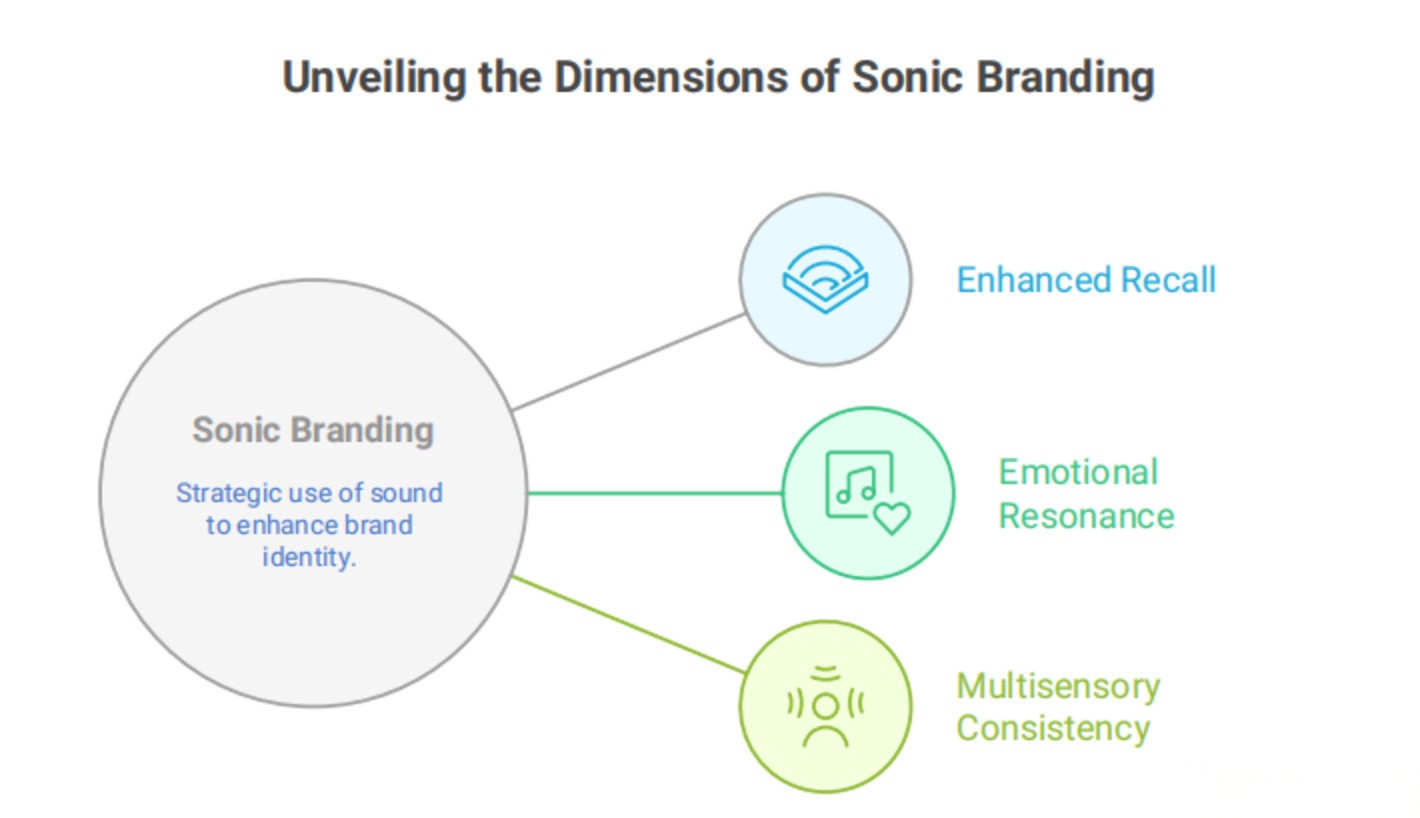
Sound has a direct impact on our emotions and memories. Neuroscience research indicates that audio cues activate brain regions associated with reward and recollection, making sonic elements highly memorable. Brands that consistently use audio signatures benefit from:
- Enhanced Recall: Audio logos and jingles can increase brand recognition by up to 70% compared to visual logos alone.
- Emotional Resonance: Music and sounds can evoke specific moods, such as
excitement, trust, or nostalgia, which can be aligned with a brand’s values. - Multisensory Consistency: A cohesive audio-visual branding strategy strengthens overall brand identity and builds trust with consumers.
Core Components of Sonic Branding
- Audio Logo (Sonic Logo): A short, 1–3 second melody or sound that represents the essence of your brand. Examples include Intel’s five-note chime and Netflix’s iconic “ta-dum.”
- Brand Theme Music: Longer musical compositions used in commercials, videos, or events to reinforce the brand’s tone and style.
- Voice and Tone: The selection of voice talent and their delivery style (e.g., warm and conversational or bold and authoritative) is crucial for spoken brand messages.
- Sound Design System: A collection of sound effects and ambiences (e.g., button clicks, notifications) that ensures every audio touchpoint aligns with the brand’s identity.
Why Every Brand Needs a Sonic Identity
- Stand Out in Voice-First Environments: With the increasing popularity of smart speakers and voice assistants, audio-first interactions are becoming more common. A unique sonic identity ensures that your brand is recognizable even without visual cues.
- Strengthen Omnichannel Presence: Consistent audio branding creates seamless experiences across various touchpoints, from in-app sounds and IVR systems to retail soundscapes.
- Boost Engagement and Loyalty: Well-crafted sonic elements can increase ad engagement by 30% and enhance purchase intent through emotional appeal.
- Foster Memorability: Studies have shown that audio-visual ads are remembered 60% longer than silent visuals alone.
Crafting Your Sonic Identity
1. Define Brand Personality and Audience
Clearly define the emotions you want to evoke (e.g., playful, trustworthy) and the demographics of your target audience.
2. Collaborate with Sound Experts
Partner with composers, sound designers, and voice artists to translate your brand’s personality into sound.
3. Develop a Flexible Sound System
Create modular elements, such as melody, harmony, rhythm, and voice, so that sonic assets can be adapted to different formats and lengths.
4. Integrate Across Touchpoints
Embed audio logos at the beginning and end of videos, use branded hold music on calls, and incorporate theme music in live events.
5. Test and Iterate
Conduct audience research and A/B testing to refine sonic elements for maximum resonance and recall.
Measuring Sonic Branding ROI
- Brand Recall Surveys: Conduct unaided and aided recall tests before and after implementing a sonic identity.
- Engagement Metrics: Monitor ad view completion rates, click-through rates, and time on page for audio-enhanced content.
- Sales Lift Analysis: Compare conversion rates for campaigns with and without branded audio.
- Emotional Response Tracking: Use biometric tools (e.g., facial coding, galvanic skin response) to measure the emotional impact of sonic elements.
Investing in sonic branding can transform passive listeners into engaged brand advocates. In an era of voice interfaces and multisensory marketing, a well-designed sound identity is not just an option—it’s essential for achieving lasting differentiation and building deeper customer connections