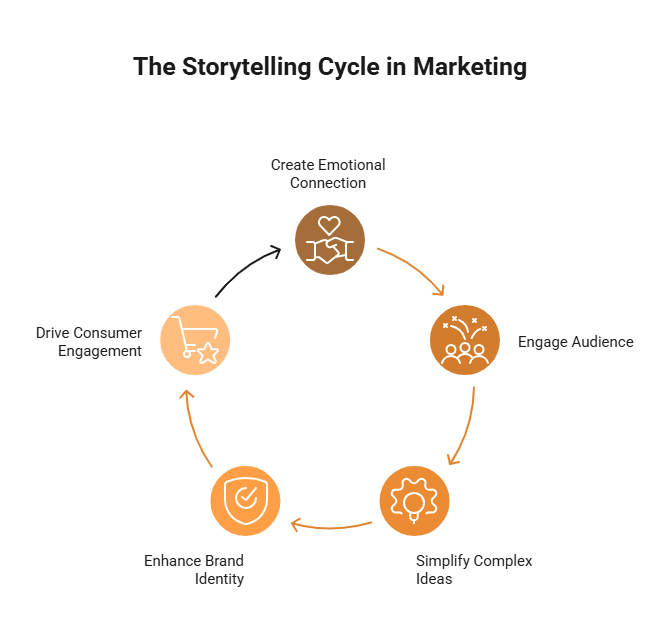
Storytelling has become one of the most powerful tools in modern marketing, enabling brands to create deeper emotional connections, build trust, and stand out in an oversaturated digital landscape. Instead of broadcasting product facts, marketers who use narratives effectively transform customer relationships and drive engagement.
Why Storytelling Works in Marketing
Emotional Connection: Stories have the unique ability to evoke empathy and emotion, rendering brand messages more memorable and relatable. Human beings are naturally inclined to connect through narratives, and a compelling brand story helps audiences associate strong feelings and personal relevance with the brand. This emotional resonance is crucial for building lasting impressions and fostering brand loyalty.
Builds Trust and Loyalty: Authentic storytelling, which highlights real experiences, founder journeys, or social impact initiatives, demonstrates transparency and credibility. This approach is instrumental in building long-lasting relationships, converting skeptical buyers into loyal brand advocates. When brands share genuine stories, they create a sense of trust that is invaluable in today’s market.
Cuts Through Content Clutter: In an era where audiences are bombarded with thousands of advertisements daily, generic marketing often goes unnoticed. Storytelling provides a powerful means for brands to stand out, capture and maintain attention, and create content that is both memorable and shareable. By crafting compelling narratives, brands can break through the noise and connect with their audience on a deeper level.
Drives Engagement and Sales: Narratives place customers at the center, illustrating how products or services can improve their lives. Stories inspire curiosity and motivate action, whether that involves making a purchase, sharing content, or returning for repeat visits. By showcasing the value and impact of their offerings through storytelling, brands can effectively drive engagement and boost sales.
Key Strategies for Effective Storytelling
- Know Your Audience: Thoroughly research your customers’ needs, aspirations, and challenges to ensure that your stories resonate on a personal level. Understanding your audience is paramount to crafting narratives that speak directly to their experiences and desires.
- Define a Clear Brand Message: Align your story with your brand’s mission, values, or origin, reinforcing what you stand for and believe in. A clear brand message provides a cohesive framework for your storytelling efforts, ensuring that your narratives consistently reflect your brand identity.
- Use Relatable, Authentic Characters: People connect with real stories, whether they are founder journeys, customer testimonials, or everyday successes. Authentic characters make your stories more relatable and believable, fostering a stronger connection with your audience.
- Visual Storytelling: Leverage images, videos, and animation to make narratives immersive and engaging across various platforms. Visual elements can enhance the emotional impact of your stories and make them more captivating for your audience.
- Make the Customer the Hero: Frame stories where your customer overcomes a problem or attains a goal, with your brand serving as the helpful guide along the way. Positioning the customer as the hero empowers them and reinforces the value of your brand in their journey.
Notable Examples
- Dove’s “Real Beauty” Campaign: This campaign focused on authentic stories from real women, sparking global conversations about beauty standards and significantly boosting engagement and revenue. Dove’s success demonstrates the power of authentic storytelling in challenging societal norms and resonating with a broad audience.
- Spotify Wrapped: Spotify Wrapped empowers users to share their personal stories about their music journey, driving massive organic social engagement and brand loyalty. This campaign exemplifies how user-generated content can be leveraged to create a sense of community and foster brand advocacy.
- AAMI’s “Rhonda and Ketut”: This campaign transformed an insurance advertisement into a beloved rom-com narrative, humanizing the brand and driving business growth. AAMI’s innovative approach demonstrates how storytelling can be used to make even traditionally unexciting products more engaging and memorable.
Storytelling Trends for 2025
- Interactive Storytelling: Augmented and virtual reality innovations are creating immersive, participatory brand experiences. Interactive storytelling allows audiences to become active participants in the narrative, enhancing engagement and creating more memorable experiences.
- User-Generated Content: Encouraging customers to share their own stories boosts authenticity and builds community. User-generated content provides a powerful means of amplifying your brand’s message and fostering a sense of connection among your audience.
- Data-Driven Narratives: Personalizing stories using analytics enhances relevance and impact for different audience segments. Data-driven storytelling enables brands to tailor their narratives to specific demographics, increasing the likelihood of resonance and engagement.
- Purpose and Social Responsibility: Brands are increasingly connecting stories to sustainability and social causes to foster trust and deeper emotional loyalty. Purpose-driven storytelling allows brands to align themselves with important social issues, demonstrating their commitment to making a positive impact on the world.
Conclusion
Storytelling transforms marketing from a mere promotional activity into a meaningful engagement. Brands that master this art build stronger relationships, drive loyalty, and rise above the digital noise. By crafting authentic, customer-centered stories and embracing new technologies, marketers in 2025 can forge memorable experiences that endure.