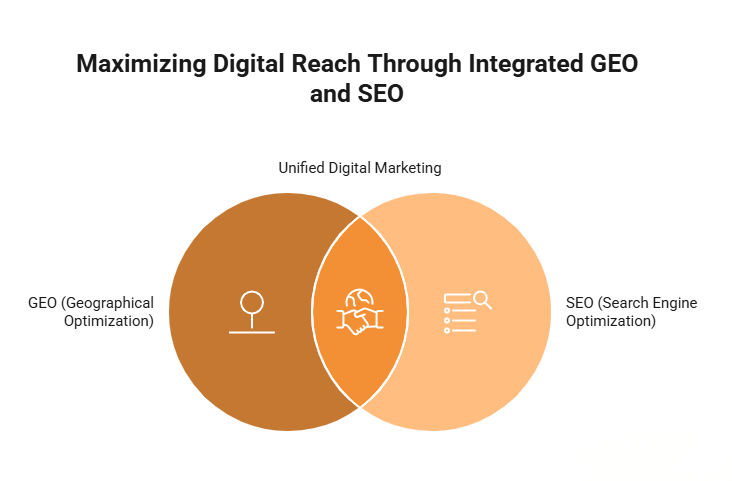
The digital marketing landscape is rapidly evolving, with AI-powered generative engines playing an increasingly significant role. While traditional Search Engine Optimization (SEO) remains vital for driving organic traffic, Generative Engine Optimization (GEO) has emerged as a critical companion strategy for maintaining visibility in this new AI-dominated search ecosystem. This document explores the differences between SEO and GEO, highlighting how they can work together to ensure a comprehensive online presence in 2025. By understanding the shifting search landscape and implementing an integrated approach, brands can maximize their visibility across all relevant touchpoints.
The Shifting Search Landscape
The Zero-Click Reality
The way users interact with search engines is changing. A significant portion of searches now end without a click to a website. According to SparkToro research, 58.5% of Google searches now end without a single click to a website. This is largely due to the rise of AI Overviews, which appear in 47% of all searches, providing users with direct answers within the search results page. Furthermore, platforms like ChatGPT are experiencing massive growth, registering nearly 5 billion monthly visits. As a result, traditional search volume is predicted to drop 25% by 2026 and 50% by 2028, as AI-powered generative engines become more prevalent.
Diversified Search Journey
Users are no longer confined to a linear search journey through Google alone. Instead, they engage with multiple platforms, starting their research on ChatGPT, cross-referencing information on Perplexity, verifying details on Google, and completing purchases via social commerce. This fragmented journey necessitates optimization across a diverse range of platforms to ensure consistent brand visibility and engagement.
What is SEO?
Search Engine Optimization (SEO) is the established practice of improving website rankings on traditional search engine results pages (SERPs) to drive organic traffic. It involves a range of techniques aimed at making a website more appealing to search engines like Google and Bing.
Core Elements:
- Keyword research and natural integration: Identifying relevant keywords andincorporating them naturally into website content.
- Backlink acquisition from authoritative sites: Earning links from other reputable websites to improve domain authority.
- Technical optimization (site speed, mobile-friendliness, crawlability):Ensuring the website is technically sound, loads quickly, is mobile-friendly, and easily crawlable by search
- On-page elements (meta descriptions, headers, alt text): Optimizing on-page elements such as meta descriptions, headers, and alt text to improve search engine understanding and user experience.
- Userexperience signals (engagement, time-on-page, bounce rate): Improving user experience to encourage engagement, increase time-on-page, and reduce bounce rate.
Success Metrics:
- Searchrankings for target keywords
- Organictraffic volume
- Click-throughrates (CTR)
- Conversionsand on-site engagement
- Domainauthority growth
Primary Goal: Rank higher in traditional SERPs to attract clicks and drive users to your website.
What is GEO?
Generative Engine Optimization (GEO) is the emerging discipline of optimizing content to be cited, quoted, and featured within AI-generated responses from platforms like ChatGPT,Perplexity, Google AI Overviews, Gemini, Claude, and Bing Copilot. It focuses on making content easily discoverable and usable by AI engines.
Core Elements:
- Structured, factual content with clear entity definitions:Creating content that is well-structured, factually accurate, and clearly defines key entities.
- Schema markup and semantic data architecture: Implementing schema markup to provide semantic context to content, making it easier for AI engines to understand.
- Strong E-E-A-T signals (Experience, Expertise, Authoritativeness, Trust):Demonstrating experience,expertise, authoritativeness, and trustworthiness to build credibility with AI engines.
- Citation friendly formatting (concise answers, bullet points, data tables): Formatting content in a way that makes it easy for AI engines to extract and cite information, such as using concise answers, bullet points, and data tables.
- Conversational phrasing matching natural language queries: Writing in a conversational style that matches the way people ask questions to AI engines.
- Multi-source verification and authoritative references:Backing up claims with multiple sources and authoritative references to enhance credibility.
Success Metrics:
- Citation frequency in AI responses
- Brand mention prominence in generated answers
- Authority recognition across AI platforms
- Visibility in conversational search interfaces
Primary Goal: Ensure your content is discoverable, quotable, and included directly in AI-generated answers—even if users never click through to your site.
Why Both Strategies Are Essential
Complementary, Not Competitive
GEO and SEO are not rivals but rather complementary layers that address different stages of the modern search journey.
- SEO ensures your site remains discoverable through traditional channels and drivestrackable
- GEO positions your brand as the authoritative source AI engines cite, building trust before users even visit your site.
- Togetherthey maximize visibility across every search touchpoint that matters in
The Reality Check:
Even as AI search grows, traditional SEO still drives billions of clicks monthly. Google remains the dominant starting point for product discovery, local searches, and transactional queries. Abandoning SEO would be premature; ignoring GEO would be shortsighted.
Integrated Strategy: SEO + GEO in 2025
1. Build on SEO Fundamentals
Start with solid SEO foundations that also benefit GEO:
- Technical Excellence: Ensure crawlability, fast load times, mobile responsiveness,HTTPS security, and server-side rendering.
- E-E-A-T Signals: Showcase experience through case studies, expertise via credentials,authoritativeness through citations, and trustworthiness via author bios and testimonials.
- Quality Content: Create comprehensive, original content that demonstrates deep knowledge.
2. Layer GEO-Specific Optimizations
Enhance your content for AI visibility:
- Structured Data: Implement schema markup for articles, FAQs, products, reviews, and local
- Answer-First Format: Place concise, factual answers in the first 50-100 words; use clear headings and bullet points.
- Conversational Phrasing: Write in natural language matching how people ask questions to voice assistants.
- EntityClarity: Explicitly define key concepts, people, places, and products with precise language AI can parse.
- Citation-Worthy Facts: Include unique data points, statistics, and original research AI engines can quote.
- Multi-Source Verification: Reference authoritative external sources to build
3. Optimize for Answer Engine Optimization (AEO)
Bridge traditional and AI search with AEO tactics:
- FAQ Sections: Address common questions directly with concise, structured
- Featured Snippet Optimization: Format content to win position zero in
- Voice Search Ready: Use conversational long-tail keywords and question-based
4. Monitor Performance Across Platforms
Track success differently for each strategy:
- SEO Metrics: Rankings, organic traffic, CTR, conversions, backlink growth
- GEO Metrics: Citation frequency in AI responses, brand mentions in generative answers, authority recognition
- Combined Metrics: Total brand visibility across traditional and AI search, share of voice in your category
Use tools like Google Search Console, ChatGPT citation trackers, Perplexity monitoring, and brand mention alerts.
5. Create Dual-Purpose Content
Design content that satisfies both humans and AI:
- Write naturally for readers while structuring data for machines.
- Balance narrative storytelling with factual precision.
- Combine engaging visuals with machine-readable schema.
- Offer depth for human engagement and concise extracts for AI citation